Critical Navigation of Increasing Flood Risks on Community Infrastructure in the UK
In December 2024, the Environment Agency released a paper highlighting the dangers of climate change in the UK. With increasing flooding, the outlook of flood risks by 2050 states that 1 in 4 properties in England would be at risk of flooding, totalling 8,000,000 properties. This would increase if homes are built on floodplains, but can be navigated by improving flood defences.
At the time of writing, 6,300,000 properties are at risk from flooding, which is above what was previously anticipated.

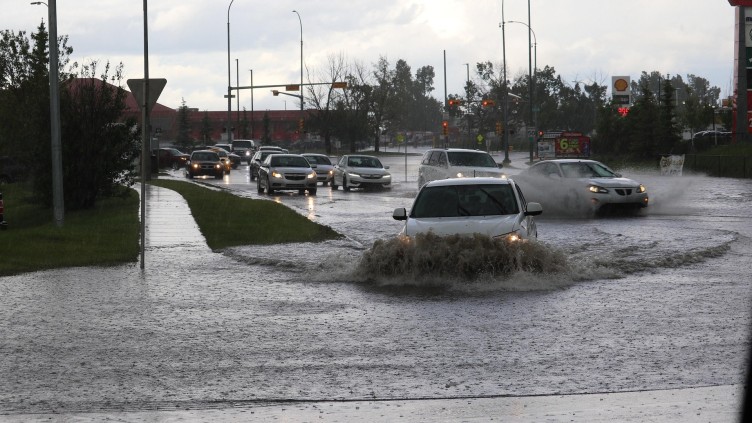
The Environmental Agency considers flooding from three primary sources: the sea, rivers and surface water run off during heavy rainfall that can overwhelm drainage systems. This year, in September 2025, a roundabout in Swansea, South Wales flood exponentially, flooding homes, blocking off roads, and drowning vehicles due to heavy rainfall and a collapsed culvert. In 2015, a sinkhole opened on a public road in Manchester following heavy rainfall. This is a story that is becoming more regular as our infrastructure cannot keep up with the environmental changes to our weather systems.
Why is Flooding on the Rise?
A large quantity of floods occurs due to heavy rainfall oversaturating rivers and overwhelming drainage systems. Rainfall, worldwide, is impacted by two things:
Warmth of the airwill impact rainfall, as hotter air can hold more moisture. Cloud formations over the ocean will draw up extra moisture, containing more and larger rain droplets. As the climate warms, heavy rain becomes more common as the air is able to hold more moisture.
Weather movement patternsalso impact rainfall. The UK’s closest jet stream influences a large part of our climate. Yet, shifts in this can lead to some areas becoming drier and some wetter.
The Environmental Agency has utilised cutting-edge methods to generate bespoke software that integrates detailed local flood risk models into a national scope. These models show that 2,400,000 properties are in areas that are at a flood risk from rivers and seas alone, and while this is not increasing, there is an increase of 88% of properties at the highest levels of risk. The reason for this change in risk factor is due to models accounting for the frequency of flooding.
Is Rainfall Really Increasing?
Datasets from the Royal Meteorological Society show that there is an increase in rainfall. Measurements taken in Sussex County show an increase of 2.3mm mean average rainfall per day from 1900 to 2020 at a steady rate. Data in 1900 shows rainfall averaged at 4.1mm per day, while in 2020 it averaged at 6.4 mm per day. Datasets like this are carried out across the UK, and all tell a similar story about our weather.

This is significant as local authority areas with higher-than-average risks of flooding may need to consider updates to drainage systems from surface and groundwater on top of river and sea-related flood defences. Much of the UK’s drainage systems have not been updated to cope with the increase in rainfall, and a great quantity of our infrastructure is old, with most combined sewer networks dating back 150 years, with some updated since the 1960’s. Schedule 3 of the 2010 Flood Water Management Act has provisions for the approval and adoption of drainage systems. In June 2024, it was announced that Schedule 3 was inthe process of being enacted in England.
Government Plans
Future challenges and opportunities have been highlighted by the central government. Challenges include the following:
- Growing urban populations increase the demand for water supply.
- Increasing flood risk up to 230,000 by 2055, with new developments due to urbanisation increasing the number of properties in areas at high risk of surface flooding. Groundwater flood risks are projected to escalate with rising sea levels, raising the water table level
- Water supply demand is likely to rise, and reports suggest that parts of South England may run out of water within the next 20 years. An additional 4 billion litres of water per day is anticipated to be needed by 2050.
Meanwhile, opportunities include:
- Emerging smart urban water systems to detect leaks and control water pressure to reduce loss.
- Rainwater harvesting opportunities to use for irrigation, toilets and firefighting to improve water security.
- Sustainable drainage systems in urban water management to imitate natural drainage systems. Including retention ponds, permeable paving and geocellular drainage systems.
Eddington in Cambridge managed to implement one of the first comprehensive water harvesting/recycling schemes back in 2014. With the go-ahead of the Cambridgeshire local authority body, the university started developments on a housing area that would have a storm collection system to reduce flooding possibilities and provide water. The water recycled is used for flushing toilets and basic washing/sprinklers. Cambridge already had a water problem at the time of this development’s inception, and the water recycling system was an answer to this issue. Their sustainable urban drainage system uses water channelling through blue and green roofs and swales. This water is then collected in newly formed lakes, which helps to reduce localised flooding risks, as well as provide usable water.
Acknowledging the threat of flooding is key to ensuring economic sustainability for the UK. Currently, annual losses from flood damage in the UK are around £700 million, and innovations to combat this growing issue can prevent rising costs in losses. Between October 2019 and August 2021, Transport for London had 55 incidents of station closures due to flooding. Ground movement from heavy rain and pipe leaks damages infrastructure and usually costs the utility sector £300 to £500 million annually.

Dealing with our environmental challenges in water management and flood risk mitigation would initially drive spending on implementing improvements. A focus on long-term water management projects like Cambridge University’s water recycling, or the use of geocellular drainage systems, will place less stress on local authority environmental management budgets.
Local authorities need to think in the long-term about their locations, water supply, and susceptibility to flood risks. At the time of writing, local authorities have the opportunity to appear as leaders in environmental water management innovation and benefit from it with lower flood damage costs going forward.
Find out more in our magazine: https://issuu.com/iesecic/docs/the_public_catalyst_issue_1